Tuesday, 12 March 2013


From generalist to specialist

I've always been told that having a huge interest in everything is a good thing. Wanting to learn every bit of random information is besides fun also expanding a lot of your knowledge and maybe even skills.
It could come in handy in projects for research or approach. Then I went to Dublin got taught Coding, Game-design and to some frustration of others game-art. And I didn't particularly enjoy coding i've managed through things and got told/taught that it's good to have an understanding of all the roles in game development. Regardless of whether I will ever use it again it makes understanding and especially communicating with someone else ( a coder for example) A hell of a lot easier.  It helps out understanding how engines work, the possible downfalls of certain approaches and even helps with solutions. Then I moved to England and started this course at DMU ( Game-Art and design for those that don't know)  Here i've first heard the term of being able to have knowledge in a T-shape.

Now I hear people thinking a T shape ? Yes... a T shape. It means knowing a bit of everything and specialize in one thing, Game-Art in my case. It is also the reason why we're being told to update a blog and research certain area's within the games development.  It's not always as fun but helps us understand the industry a lot better.

Now talking about the industry a lot of publishers like for example Activision have studio's to make their games. Those studio's are often specialized in what they do but..... what if their not ? What if a deadline approaches and there's still plenty of assets to be made. What if there's certain functions and the programmers don't have the knowledge or specialisation in solving it.  A studio can often then decide to outsource some of the work to other smaller and specialized companies.  These companies often only do small bits and pieces and make sure their good at what they do and what they do they do best.

An example i found would be: Blackbow Which is a small company in China that has worked on several AAA titles making assets and/or characters for example: Age of empires III making hundreds of characters or Golden compas by making characters / lods and several props.

they can be found here : http://www.blackbowsoft.com/

Or 3pointstudios which has had a good thing going with Bethesda softworks by making the weapons.
they can be found here :  http://www.3pointstudios.com

Unfortunately outsourcing can also be used for the wrong reasons when for example it's being done for cheaper labour. People could easily lose jobs or control over their own product. a very good read on this can be found here:

http://www.forbes.com/sites/freekvermeulen/2010/11/16/the-hidden-dangers-of-outsourcing/

where the writer: Freek vermeulen writes about how IBM tried to outsource everything only to put a stamp on it and by accident created a powerfull alliance between Intel and Windows.
So outsourcing has it's good and it's bad sides.



Re discovering Ink !


In the last 2 live drawing sessions I've caught the attention of the ink pen brush. So I decided to buy and try it and absolutely fell in love with it again.  The idea of making permanent marks without being able to easily adjust it but also the quickness and differences in lines have been really enjoyable.
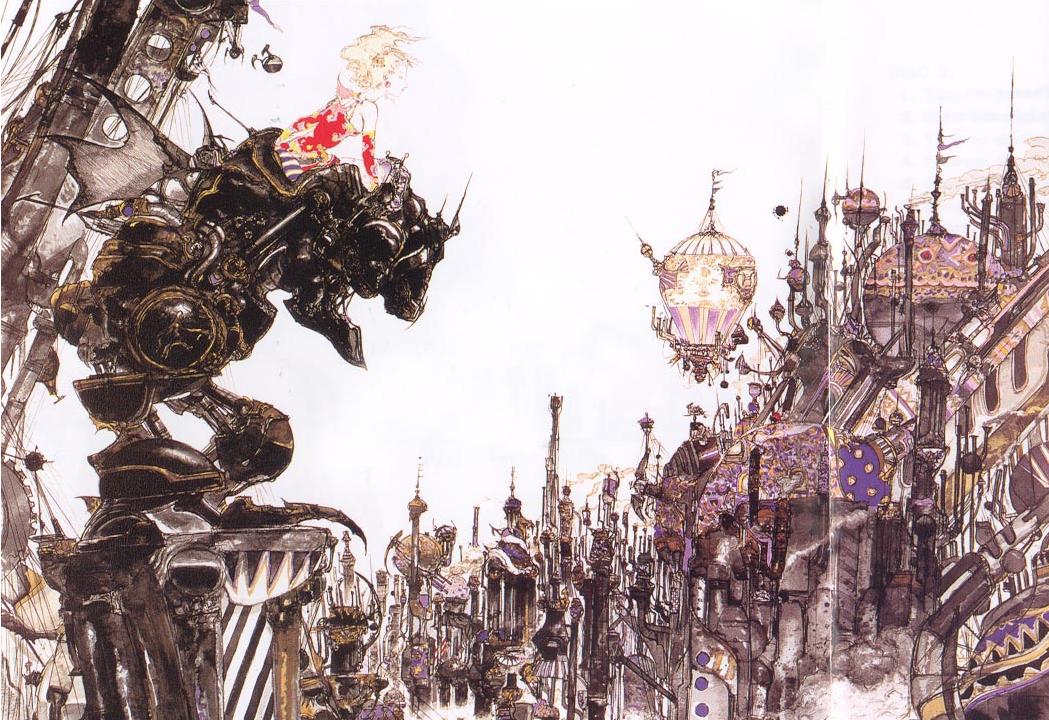
I started looking around to see other artists that use ink a lot and kind of ended up with 2 very inspirational artists. One I found thanks through Daniel Hill Is Yoshitaka Amano who is well known from the early concept art of Final Fantasy and vampire hunter D. and can be seen:
https://www.youtube.com/watch?v=QaldbLw_dWs

https://www.youtube.com/watch?v=l-oAXRJ05qg

And Yoji Shinkawa, well known from the concept art of metal gear solid:

https://www.youtube.com/watch?v=9gJQyVfKZJg

and just looking at these video's give me a burst of motivation to get my Ink pen brushes out and start smacking some ink around till I manage to reach a standard much like them !

here's some of my of the pieces I really like:


and Yoshitaka Amano


Unfortunately i don't have neither of their art books ( yet) so i haven't been able to see everything but i can't wait to get my hands on them !

Elements of game technology, part three: interaction design


A very important aspect of playing games is often the controls. Are they clunky, easy to use, would your intuition tell you what button do what or would you need a tutorial for this ? Also HOW are you controlling it ? the keyboard, the mouse or controller ? maybe the upcoming leap motion ?


Though for some reason the little leap motion box isn't visible on the image this is suposedly what using the leap motion would be like. 

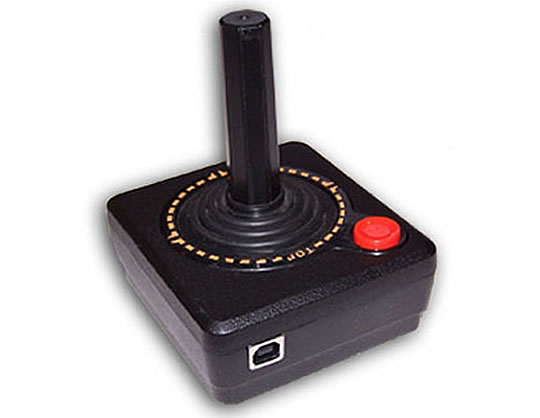
In this post I'd like to talk a bit about these things. Back in the days... the early days of the gaming industry things we're a lot more simpler. They had to be because there we're huge limitations and and a lot of creativity was needed to try and get around some of these limitations.  Based on these limitations came controllers / controls.  giving us the simple controllers such as the one from the Atari or Nintendo


Then as time went on, technology improved, and limitations got less and less for some reason game-play and controllers followed this trend.  First Super Nintendo, Sega then playstation and now even Xbox...


it went from a few simple buttons ( 4 to 11 digital buttons, 2 analog triggers, 2 analog sticks and a digital d pad) to complete chaos.  Older people often get scared by just looking people use them cause they have no clue what's going on, but even though there's more buttons a lot of people don't seem to mind and easily get along with it. Why ?


Especially these days however it's been going on for quite a while a lot of buttons are being used for roughly the same thing. So will for example the analog sticks steer your character, the triggers usually have a vital function and in xbox's case the middle button go back to the xbox overlay but with sony the start / select button can be found in the middle.


The same can be said with PC games. where it started off with just a few simple keys these days ( especially in mmo's) players often use ALL the keys on the keyboard for macro's. Especially in Player versus Player skirmishes. Very cleverly the game hardware provider Razor heard of this and brought out the razor Naga ( and has now many variations ) which features 12 buttons on the side of the mouse to allow the user to easier access a variety of skills.


Here an example of Arma2 keyboard controlls ( yes it's not an mmo) almost the full keyboard is being used for functions.

Other things that have companies have done for PC gamers is for example Logitech which brought out a specialized gamers keyboard the " g series"  Taking the G15 as example which had 16 macro's on the left of the keyboard. A small display for vital information or quick view in your Itunes ( Very important while playing games !! ) It had led displays making it easier to see your keyboard in the dark and best of all a button to disable the utmost annoying/irritating windows key on the keyboard.


Both Logitech and Razor now also bring out Headsets specialized for gaming giving a better quality for voice chat/sound and immersion into games .

However getting back to consoles as well.  Controllers have tried to immerse players as well with for example the rumble feature which starts vibrating when a player performs a certain action or get's hit. Or the wii that decided to go on motion detection trying to get people to exersize more.  In this and upcoming year there will be a whole new console generation and a lot of exiting new improvements will take place it will be fun to see what sort of new things they will release. As for PC gamers things will improve and change all the time.


Playstation 4: https://us.playstation.com/ps4/
Razor naga: http://www.razerzone.com/gb-en/gaming-mice/razer-naga
Logitech g series: http://www.logitech.com/en-roeu/promotions/7295


Game engines


So this time I will talk a little bit about game engines. The use and differences of some of them. Unfortunately there's too many to go into all of them but I will keep it about a few big ones.
So what is a game engine ? The game engine much like the name suggest is the engine behind the game.
It puts all the little pieces together and directs them to the final outcome. The place where assets, sound, Coding, effects like particles and game-play blend into the game it's supposed to be.


So it's safe to say that game engines themselves do not make good games but simply provide the tools to create master pieces. Often when getting an engine the developers ( of the engine) have already set-up some tools that they think will commonly used by the user however here also comes a big difference.


Some game engines will have a component based architecture. This means that certain elements can be replaced by other components like Havoc for physics  or Blink for video's which could potentially make a game stand out a lot better on certain area's. However not all engines allow this. Some game companies have decided to make their own engine a few of those are ( Valve,Crytech,Square, ID) and others prefer to use the already existing engines such as for example Bioware, Trion and NCSoft.

So what would be some of the differences of the engines then ?

basically different engines work in a different way. For the current project i'm working on I had to do some research into UDK and Crytech to decide what would be best suited for the goal we're trying to achieve. This was a pretty difficult task because there's a lot of shallow discussions going on by people that use the standard assets rather than the functionality and pro's and cons of using the engine itself.


A good discussion I found on this topic was:
http://www.polycount.com/forum/showthread.php?t=86377

Where most people say UDK and Cry engine are fairly the same. Apparently the license for the Cryengine is a lot more expensive than the UDK and obviously UDK has been around a lot longer so there's a lot more documentation/help to find for UDK. However Cry engine is a lot easier to use. A lot easier to use at the cost of less customisation though. So trying to read this all and figure out a solution i noticed how every single tutorial for Cry engine was for exterior levels rather than interior like we we're trying. This kind of pulled me over to one side and made me choose UDK ( and in the end we all agreed on this) Where UDK would be more made for " corridor" shooters Cry engine is more made for outdoor shooters. This doesn't mean you won't be able to do the other with it but it would be a lot more effort and struggle to achieve the same thing. Another few good engines that I'm definitely interested in would be the Luminus Square engine from Square enix or the Hammer engine from Valve.
Unfortunately I haven't had the time to look at either yet but I'm looking forward to the summer holidays to spend some time messing around with both.


The last engine i would like to mention is Unity.  Visually this might be the weakest engine of the ones mentioned before however the freedom and customization far surpasses the others and has a cheaper license too. The con could be that coding is a lot more important in this engine than the others as there's no real basic gameplay/set-up for this engine however because of this and the freedom to use different coding languages it's easier to make quick and visual changed to the gameplay style/shaders and add effects in.

Official website for UDK - http://www.unrealengine.com/udk/
Official website for Cryengine - http://www.crytek.com/
Official website for unity - http://unity3d.com/


-- edit -- i just read that square enix will not release the luminus engine to the public :(.
Source:  Luminus not open for public..

Saturday, 1 December 2012

Documentation in games


Documentation is an important (and annoying) part of the games industry. The reason there's documentation is for employees to be able and read up on guide lines , do and don't and idea's, plannings and goals.


And yet documentation is the most boring part of game development ! 

Depending on what department uses the document it can be referred to in different ways. One of them is: " Design document" . Each branch has its own document ( animation, art, programming, game design, level design etc) It's often the lead that keeps track of the document and makes sure everything is up to date. This is so the lead can keep track of progress , possible issues, limitations and such.


My idea for a game:

I would like to create a Community project before leaving university where people of different courses work together. It's something I've been thinking about for ages but so far haven't worked out yet.
This Assignment/post Could proof part of the foundation for this idea and i will there for treat it that way.

The way I would like to set it up is to give everyone a challenge yet make something achievable.
As I'm living with several games programmers i interact with them on a daily basis. Same so during the summer where one of them had his summer project making a simple 2D game. While thinking of game-play i mentioned how Super Smash Brothers has last it's time due to its appealing game play and being a "pick up and leave" game ( a game you can play for 10 minutes and then leave again )
Also working on a game like that would mean an easy set-up with plenty of opportunity to expand if there's time left as long as the basic is set where as with some other genre's this is not always the case.

Keeping this in mind I wouldn't like to make a Super Smash Brothers game if there would be a team of people but more a Hack and Slash type of game.


Diiieeeeee link !!!! 

but why ?

The reason for this is just like the one states above, It's fairly easy to set up and can be expanded with all the time that is left over. In fact most of the coding has been done by myself 3 years ago ( in a horrible way and I'm sure there is plenty that should be redone)
however just for a showcase during the pitch to other people this might proof use full.
(Of course everyone would get a vote in things but to set an idea I'd start of with how I'd like to see things. Considering this would be an educational project and portfolio piece for everyone we wouldn't necessarily need funding) Also due to the set-up I have in mind if people would leave the project or not get work done this project could easily be cut short at any time after the basic is set-up.

For this project I'd prefer to start with a minimum of 3 people ( Me on art and animation, a programmer and a game/level designer) but the more people join the easier things get and the more specialized people can get. Purely because I'd like to stick to art I will write a short " document" here on a start. ( unfortunately no concept art yet and I'm sure I will work things out once this idea becomes a little bit more concrete )

I'd like the game to start off in a house where a small event takes place driving the player outside to a dark, misty & medium sized Victorian village. This is where the player will first interact with other Npc's and slowly get's familiar with the controls / game-play. This will also be the place the first combat will take place. The player would have plenty of space to run around but with clever game design not be able to leave the town till Certain events are completed ( and in our case we have decided to continue the project after) This would pretty much be the foundation of the game as most of the game play is covered in this case. After this it can be expanded with more narrative and for example adding area's to the city and new area's/environments and such more NPC's and enemies.


It would be nice to add some form of fantasy in the game to practice my artistic skills in different areas such as Icy/crystal landscapes, particles etc.

Concept art for Final fantasy 13 ( Bresha lake)
As a guideline for the art it would be: Stylized ( but only where it adds visual interest), Custom made textures ( this due to a personal preference so I can practice this but also pretty much required for some of the fantasy settings), Grim & foggy mood This not everywhere but in the Victorian street's it would be a cold early winter night, there's some fog and in generally a grim mood)


A good example of the mood/setting i'd like in the village. Image has been found on:http://www.pocketfulofbooks.com/2012/07/book-review-sweeney-todd-demon-barber.html  and is unfortunately uncredited.

The main character: A young guy in his early twenties, average Victorian  clothing, Short dark brown hair, stubbles, average body type.
Tech spec: 7k triangles, 512 Diff, Spec, Normal map with possible extra 256 map.

NPC's: Depending on what NPC this is though for the starting area their all in Victorian clothes varying from High class to child workers.
5K triangles, 512 Diff, Spec, Normal map

Vehicle(s): Carts need to be made in a way so it can be used in several ways such as a broken cart blocking the way out of the village.
3.5k triangles ( with possibility of slightly more for the small adjustments) 256 diff, spec, normal

Environment: Victorian town, Interior room/house and possible shops etc in the town.
Tech spec: Unsure. Diff, Spec, Normal.

Props: Things like crates, Stalls, Lamp posts, Road signs and such
Tech spec: 400 tri's MAX depending on the prop. 256 diff and spec / normal where needed

Engine isn't decided yet as Unity seems to support the most flexability when it comes to game-play but not the best engine for an artistic portfolio piece ( proper research on this needs to be done)

I'll leave this post with a quote i found from David brinkley: “A successful man is one who can lay a firm foundation with the bricks others have thrown at him”. 

This post will be continued upon in a second part once things progress a bit more.

Friday, 30 November 2012

Level design


Much like game Design I used to think of level design as an artistic process of making a level look pretty. This though got crushed early when doing the game-design course at " Ballyfermoth college of further education"  when someone working in the Industry came over and told us about his job as a level designer. After the class I had a little chat with him asking about the difference between actually making the graphics and placing the objects/making a playable level.

The difference between a level designer and environment artist. The level designer only cares about volume while the artist worries about the way it looks.
The easiest way to describe the job of a level designer would be: Designing the path the player has to/ can follow to go from point  A to B.  How the environment looks like is not his job however the placements of assets, power-ups ( in any form from ammo to health etc )
Enemies, NPC'S, duration of the level are all part of his job.  A level designer often get's told what sort of level he will work on, the assets available , the purpose and story behind the level and  can then start blue boxing a level. Blue boxing is a term used for making a level out of basic shapes
to get a rough idea of where the players can go and how they will reach certain places it's much like an interactive blue print of a level. Most engines will have some easy way of  letting people blue box without having to start  3D software.(p.s people use different terms for this)

Some blue boxing i've done a long time ago.

Another possible job of a level designer could be to design certain obstacles that occur in a level. This could either be part of the Games design or part of a different reason such as slowing players down from progressing too fast through a level.
Valve is one of those companies that do their level design very well. They break levels up in arena's where players fight off monsters and switch them with puzzles to calm players down and give them some time to recover /restock. Another thing Valve has done really well when it comes to level design is in Left for Death 2. The artificial director decided when to spawn zombies to make players move faster ( or slower) what zombies to keep things interesting and challenging but is also able
To make small changes to the level by opening or closing parts of the level. this makes the level re playable and unpredictable. A good example of a game where this has been done poorly would be Diablo 3. The levels pretty much stay the same the variety in monsters is minimum after the first play through making it quite repetitive.

Depending on what sort of level is being designed there's a few things the level designer needs to keep in mind when it comes to a Single player level it's often : How hard is the level compared to the ones before / after.
What skills will the player require to complete the level ( have they been taught or do they need to be introduced), How much time does it take to complete, Is there a story involved and if so where ? is it consistent are there any glitches and if so how can they be fixed, where will the power-ups/weapons/health/items etc be and probably most important is it fun to play.

Multiplayer is equally as hard if not harder ( depending on the game) as there's a lot of balancing questions that need to be asked: Are both sides ( if there are sides) equally matched, What sort of level will this be ( in first person shooters it might be a sniper level or trying to prevent sniping in general, based on
the level design this can go either way) , is it repetitive and/or replay able, where will the power-ups/weapons/health/items etc and of course is it fun ?

It's an important thing to plan a level out carefully and do plenty of play testing to get feedback on what works and what doesn't as this often affects the end result.

Some small examples

Planetside 2 is a Free to play Masive Multiplayer Online First Person Shooter ( mmo fps)
It's an interesting example as it combines several level design decisions together.

As can be seen there's a lot of open space making it perfect for Vehicular combat ( planes/tanks etc)


And for snipers ( this guy did not have a good day )

However there's plenty of cover ( if he would have only used this) making it possible to both possible to
snipe and fight in close/medium range. these are several decisions made by the level designer.

The importance of composition


I'd like to write a bit about composition and why it is important. To start this off i asked myself a few questions: What is/Does composition, How to apply composition, what different types of composition are there ?

So first off, What is (visual) composition ? There's many different types of composition. it doesn't surprise that when looking in a dictionary tells:

"the act of combining parts or elements to form a whole."(http://dictionary.reference.com/browse/composition)

"The combining of distinct parts or elements to form a whole" and "Arrangement of artistic parts so as to form a unified whole."  (http://www.thefreedictionary.com/composition)

"
the action of putting things together; formation or construction"
(http://oxforddictionaries.com/definition/english/composition)

but the best example was found on:  http://www.artlex.com/ArtLex/c/composition.html
"The plan, placement or arrangement of the elements of art in a work. It is often useful to discuss these in reference to the principles of design, as well as to the relative weightof the composition's parts."

So why is this so important ?

Composition should be applied to get the viewers interest , whether this is a game, a cut scene, a still or concept piece. There's many ways in which this can be achieved and many things that need to be though through. Balance, Focus point, Contrast, proportion and harmony.


A well composed painting: The silver goblet by Jean Baptiste Simeon Chardin 


What is important in composition ?

There's a lot of different ways composition can be applied as mentioned:

Harmony: Making sure everything fits together and nothing feels out of place.

Balance:  If your main subject is on the left side of the screen do you add another object to fill up the empty space to make it more interesting ? Not doing so can give the viewer a sense of imbalance


The chess pieces are placed in the frame in a way that makes the image in balance.
(Photo found on: http://shazimalik.wordpress.com/2012/04/22/balance-in-photographic-composition/)

Focus point: The point where the viewers interest should be leading towards to

contrast: The differences between dark shades and lighter and/or the way colors are applied.

A good example of a photo with contrast made by: Siddharthan Raman

proportion: How would things be displayed, far away or really close by and how do they relate to other objects ?

Background:  a good background can make the focus point stand out more easily and/or lead the viewers eye the path it should follow.

Small tricks that can be used:

there's a few things that can help out on making a composition

Rule of thirds: In the rule of thirds it's all about the placements within frames.  The screen is divided in a grid of 3 by 3. If then the object of interest is placed aligning to either of the crossing lines it should make a much more interesting to the eye as having the object of interest in the middle looks dull and boring( even though it's called center of interest it shouldn't actually be in the center)
Counterpoint is when you place a secondary focus point on the diagonal opposite of the other  this makes an image even more interesting


A good example of how the rule of thirds is applied in a photo by:
http://prophotoguru.com/using-the-rule-of-thirds/